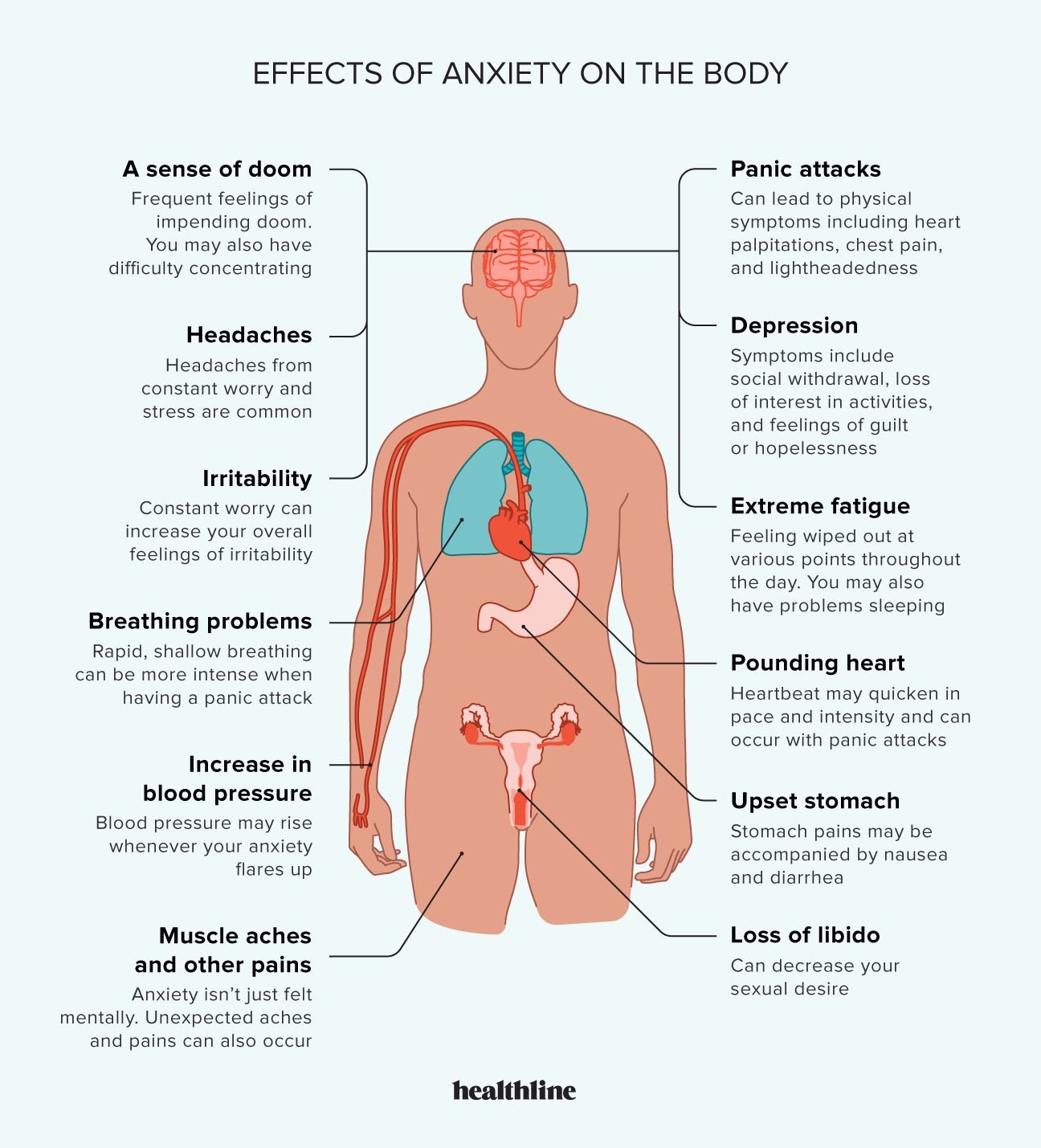
If you feel a constant, low hum of worry, a relentless to-do list scrolling in your mind, or a physical tightness in your chest when you check your phone, you are not alone. You are not broken, and you are not failing. You are likely experiencing a natural, human response to an increasingly unnatural and demanding world.
Anxiety has become the silent soundtrack to the American dream. It’s in the frantic pace of our cities, the curated perfection of our social media feeds, the pressure to optimize every aspect of our lives—from our careers to our hobbies to our sleep. We are living in a state of chronic, low-grade threat, and our nervous systems are paying the price.
This isn’t just about feeling “stressed out.” This is about our fundamental biology. Our autonomic nervous system, the ancient, hardwired part of us designed to keep us safe, is being constantly triggered by 21st-century pressures. The “fight-or-flight” response, meant for saber-toothed tigers, is now being activated by email notifications, financial pressures, and the 24/7 news cycle.
The good news is that we are not powerless. By understanding the root of this dysregulation and turning to time-tested, holistic practices, we can learn to soothe our frazzled nerves, reclaim a sense of calm, and build resilience from the inside out. This article will explore the “why” behind our collective anxiety and provide you with five foundational, holistic practices to gently and effectively calm your nervous system.
Part 1: Understanding the Perfect Storm – Why the American Lifestyle Fuels Anxiety
To effectively address a problem, we must first understand its origins. Our modern anxiety isn’t a personal failing; it’s a logical consequence of a lifestyle that runs counter to our evolutionary design.
The Always-On, Productivity-Obsessed Culture
The Puritan work ethic, while historically significant, has evolved into a dangerous cultural dogma: our worth is tied to our output. We glorify “hustle culture,” where being busy is a badge of honor and rest is seen as laziness. This creates a relentless internal pressure to do more, be more, and achieve more. Our nervous systems, which require periods of rest and digestion to repair and rejuvenate, are denied this essential downtime, leading to a state of chronic sympathetic (fight-or-flight) dominance.
Digital Overload and The Comparison Trap
Our smartphones are modern-day miracles that have also become pocket-sized purveyors of anxiety. The constant barrage of notifications fragments our attention, pulling us out of the present moment and into a state of hyper-vigilance. Social media platforms, in particular, create a “comparison trap,” where we measure our messy, real lives against the highlight reels of others. This fuels feelings of inadequacy, loneliness, and a fear of missing out (FOMO), all of which are potent anxiety triggers.
Economic Precarity and The Erosion of Community
Despite material wealth, many Americans live with a underlying sense of financial instability. The rising costs of housing, healthcare, and education, coupled with stagnant wages and student loan debt, create a pervasive background of economic threat. Simultaneously, the traditional support structures of extended family and tight-knit communities have eroded. We are more connected digitally yet more isolated socially than ever before. This lack of a reliable “tribe” leaves us to face our struggles alone, amplifying our stress and anxiety.
The Standard American Diet (SAD) and Inflammation
We literally are what we eat, and the Standard American Diet—high in processed foods, refined sugars, unhealthy fats, and artificial additives—is making us sad and anxious. Emerging research in the field of nutritional psychiatry reveals a powerful gut-brain connection. An inflamed gut, caused by a poor diet, can lead to an inflamed brain, disrupting neurotransmitter balance (like serotonin and GABA) and directly contributing to symptoms of anxiety and depression.
A Disregulated Nervous System: The Core of the Issue
All these factors converge on one central point: our autonomic nervous system (ANS). The ANS has two main branches:
- The Sympathetic Nervous System (SNS): Our “gas pedal.” It’s responsible for fight-or-flight. It increases heart rate, blood pressure, and cortisol, sharpening our focus for immediate danger.
- The Parasympathetic Nervous System (PNS): Our “brake pedal.” It’s responsible for “rest-and-digest.” It slows the heart rate, promotes digestion, and allows the body to repair itself.
The American lifestyle has us stuck with our foot hard on the gas pedal. We are living in a state of SNS dominance, and our bodies are exhausted. The goal of holistic healing is not to eliminate the SNS—it’s vital for our survival—but to restore balance by consciously and regularly engaging the PNS.
Part 2: A Holistic Approach to Healing
Holistic healing means addressing the whole person—mind, body, and spirit—rather than just treating symptoms. It recognizes that these aspects are deeply interconnected. A anxious mind creates tension in the body, and a tense, under-nourished body fuels an anxious mind.
The following five practices are not quick fixes or pharmaceutical replacements. They are foundational skills, akin to learning to breathe or walk. They require practice and patience, but their cumulative effect can be transformative, rewiring your brain and recalibrating your nervous system for long-term calm and resilience.
Practice #1: Resourcing and Orienting – The Foundational First Step
Before we can dive into deeper practices, we must first establish a sense of safety in the present moment. When anxiety strikes, we are often pulled into catastrophic future thinking or traumatic past memories. Our first practice, drawn from Somatic Experiencing and trauma-informed therapies, is about grounding ourselves firmly in the now.
The Theory: Finding Your Anchor in the Storm
Anxiety is, at its core, a feeling of unsafety. Resourcing is the process of consciously identifying and connecting with things, people, places, or memories that evoke a sense of comfort, peace, and stability. An “internal resource” could be the memory of a loved one’s hug, the feeling of sun on your skin, or the image of a peaceful landscape. An “external resource” could be a pet, a favorite blanket, or a piece of music.
Orienting is a simple yet profound biological process. It’s the act of using your senses to notice your environment. In nature, an animal that escapes a predator will immediately stop, shake off the residual stress, and orient—looking, listening, and sniffing its surroundings to confirm the threat has passed. We can do the same. By consciously noticing the details of our safe environment, we send a powerful signal to the amygdala (the brain’s fear center) that says, “In this moment, I am safe.”
The Practice: How to Resource and Orient
You can do this anytime, anywhere, especially when you feel anxiety beginning to stir.
- Pause: Stop what you are doing. If possible, close your eyes.
- Resource: Bring to mind your resource. It could be a person, a pet, a place in nature. Try to engage all your senses. If your resource is a beach, can you hear the waves? Smell the salt air? Feel the warm sand? Spend 20-30 seconds fully immersing yourself in this felt sense of safety and comfort.
- Orient: Open your eyes. Without moving your head too quickly, slowly begin to notice your actual environment. Let your gaze softly land on five things you can see. Notice their colors, textures, and shapes.
- Listen: Now, notice four things you can hear. The hum of the refrigerator, distant traffic, your own breath.
- Feel: Bring your awareness to three things you can feel. The texture of your clothes, the chair beneath you, your feet on the floor.
- Smell & Taste: Notice two things you can smell and one thing you can taste.
This simple 5-4-3-2-1 grounding technique pulls you out of your anxious thoughts and into your body and your environment, actively engaging the calming parasympathetic nervous system.
Practice #2: Mastering Your Breath – The Remote Control for Your Nervous System
If you only adopt one practice from this list, let it be this one. Your breath is the most powerful and accessible tool you have to directly influence your nervous system. It’s the bridge between the conscious and the unconscious, between the mind and the body.
The Theory: The Vagus Nerve and the Physiology of Calm
The science behind breathwork is rooted in the vagus nerve. This long, wandering nerve is the command center of your parasympathetic nervous system. It runs from your brainstem down to your colon, influencing your heart, lungs, digestion, and more. The state of your vagus nerve—your “vagal tone”—directly impacts your resilience to stress.
When you are anxious, your breathing becomes shallow and rapid, housed mostly in the chest. This stimulates the SNS. Conversely, slow, deep, diaphragmatic breathing stimulates the vagus nerve, triggering a “relaxation response.” It slows your heart rate, lowers blood pressure, and signals to your entire body that it’s safe to rest and digest.
The Practice: Coherent Breathing and The Extended Exhale
There are many breathwork techniques, but two are particularly effective and easy to learn.
A. Coherent Breathing (or Resonant Breathing)
This technique is scientifically proven to create optimal harmony between your heart, respiratory, and nervous systems.
- Sit or lie down in a comfortable position. Place one hand on your chest and the other on your belly.
- Inhale slowly and deeply through your nose for a count of 5 seconds. Feel your belly expand, while the hand on your chest remains relatively still.
- Exhale slowly and fully through your nose (or mouth with pursed lips) for a count of 5 seconds. Feel your belly gently draw in.
- Repeat this 5-second inhale and 5-second exhale cycle for 5-10 minutes.
Aim to practice this twice daily. It’s like a reset button for your entire system.
B. The Extended Exhale
The exhale is particularly potent for activating the vagus nerve. Lengthening it relative to your inhale is a powerful calming signal.
- Inhale gently through your nose for a count of 4.
- Exhale slowly and completely through your nose for a count of 6 or 8.
- Repeat for several minutes.
If you feel lightheaded, return to your normal breathing. The key is gentle, relaxed breathing, not force.
Practice #3: Embodied Movement – Shaking Off the Stress
When an animal experiences a life-threatening event, it doesn’t get stuck with anxiety. It flees, and if it escapes, it literally shakes and trembles to discharge the massive energy mobilized for survival. We humans, due to social conditioning, interrupt this natural process. We “hold it together,” internalizing the stress, which then becomes trapped as tension in our bodies. Embodied movement helps us complete this cycle.
The Theory: Completing the Stress Response Cycle
Anxiety is pent-up, unexpressed energy. The stress response prepares us for intense physical action, but in our modern world, that action rarely happens. That energy has nowhere to go, so it stagnates, creating muscle tension, pain, and a constant feeling of being “on edge.”
Embodied movement—movement that is focused on internal sensation rather than external appearance or performance—helps to:
- Release trapped stress hormones like cortisol and adrenaline.
- Relax chronic muscular tension.
- Increase body awareness, helping you notice signs of anxiety earlier.
- Stimulate the flow of lymph and blood, promoting detoxification and healing.
The Practice: Trauma-Informed Yoga and Shaking
A. Trauma-Informed Yoga
Unlike some vigorous yoga classes, trauma-informed yoga focuses on gentle, mindful movement and choice. The emphasis is on feeling safe in your body. A simple sequence could be:
- Cat-Cow Pose: On your hands and knees, gently arch your spine as you inhale (Cow), and round it as you exhale (Cat). This movement massages the spine and organs and links breath with motion.
- Child’s Pose: A deeply restorative and grounding pose that promotes a sense of safety and surrender.
- Legs-Up-The-Wall Pose: A profoundly calming inversion that doesn’t require strength or flexibility. It changes blood flow, soothes the nervous system, and can help reduce a racing heart.
The goal is not to achieve a perfect pose, but to listen to your body and move in ways that feel nurturing.
B. Shaking Medicine
This might feel silly at first, but its effects are powerful. Many cultures have used shaking practices for ceremonial and healing purposes.
- Stand with your feet shoulder-width apart, knees slightly bent.
- Put on some rhythmic music if you like.
- Start by gently shaking your hands. Then let the shake move into your wrists, arms, shoulders, chest, torso, and legs.
- Shake your entire body for 2-5 minutes. Don’t think about how you look; just let your body move intuitively.
- Afterwards, stand still for a minute and notice the sensations in your body. You will likely feel a buzzing, tingling aliveness and a noticeable reduction in mental chatter.
Read more: The Loneliness Epidemic: How to Build Deeper Connections in Your Community
Practice #4: Nature Immersion – The Original Pharmacy
We have spent 99.9% of our evolutionary history in nature. Our physiologies are calibrated to it. The modern, concrete, fluorescent-lit environment is a profound sensory mismatch for our ancient brains, contributing significantly to our dysregulation.
The Theory: Biophilia and The Relaxing Sounds of Nature
The Biophilia Hypothesis, popularized by E.O. Wilson, suggests that humans have an innate tendency to seek connections with nature and other forms of life. When we satisfy this need, we thrive. Studies show that time in nature can:
- Lower cortisol levels, blood pressure, and heart rate.
- Reduce activity in the prefrontal cortex (the brain’s “rumination center”).
- Boost mood and improve cognitive function.
Furthermore, the sounds of nature—bird songs, rustling leaves, flowing water—have a unique acoustic structure. Unlike the jarring, unpredictable noises of traffic and construction, natural sounds are processed by our brains as non-threatening. They can even increase heart rate variability (HRV), a key marker of a healthy, resilient nervous system.
The Practice: Forest Bathing and The 20-Minute “Nature Pill”
You don’t need to run a marathon in the woods. The key is mindful immersion.
A. Shinrin-Yoku (Forest Bathing)
This Japanese practice is not about hiking or exercise. It’s about being with the forest, not moving through it.
- Find a green space—a park, a forest, even a tree-lined street.
- Leave your phone behind or put it on airplane mode.
- Walk slowly and aimlessly. Let your body decide where to go.
- Engage all your senses. Touch the bark of a tree. Notice the scent of the air after rain. Listen to the symphony of sounds. Observe the intricate patterns on a leaf.
- Find a spot to sit quietly for 20-30 minutes, simply observing.
The goal is to receive the healing properties of the forest through your senses.
B. The 20-Minute “Nature Pill”
A 2019 study found that spending just 20 minutes in a nature-rich setting significantly lowered cortisol levels. Make it a non-negotiable part of your day. Sit on a park bench during your lunch break, walk through a botanical garden, or simply sit under a tree in your backyard. The key is consistency.
Practice #5: The Power of Proactive Rest – Reclaiming Sleep and Stillness
In a culture that glorifies busyness, rest is a radical act. It is not a reward for exhaustion; it is a biological necessity. Chronic sleep deprivation and a lack of true stillness are primary drivers of anxiety.
The Theory: Sleep, The Glymphatic System, and The Default Mode Network
Sleep: During deep sleep, your brain performs essential housekeeping. The glymphatic system flushes out neurotoxic waste products that accumulate during the day, including proteins linked to anxiety and neurodegenerative diseases. Poor sleep disrupts this process, leaving your brain “dirty” and inflamed, priming you for anxiety the next day.
Stillness: When we are not focused on an external task, our brain’s Default Mode Network (DMN) activates. This is the network responsible for self-referential thought, daydreaming, and memory consolidation. However, in people with anxiety, the DMN is often overactive and dysregulated, leading to the cycle of rumination and worry. Practices of stillness, like meditation, help to calm the DMN and break this cycle.
The Practice: Sleep Hygiene and Non-Sleep Deep Rest (NSDR)
A. Cultivating Sacred Sleep: A Holistic Sleep Hygiene Protocol
- Consistency is King: Go to bed and wake up at the same time, even on weekends. This regulates your circadian rhythm.
- Embrace the Dark: An hour before bed, dim the lights and eliminate blue light from screens. Blue light suppresses melatonin, the sleep hormone.
- Cool Down: A drop in core body temperature is a signal for sleep. Keep your bedroom cool (around 65°F or 18°C).
- The Bedroom is for Sleep and Sex Only: Remove work materials, TVs, and other stressors from your sleep environment.
- Wind-Down Ritual: Create a 30-minute calming routine: gentle stretching, reading a physical book, sipping herbal tea (chamomile, passionflower), or writing in a gratitude journal.
B. Non-Sleep Deep Rest (NSDR) – Yoga Nidra
Pioneered by neuroscientist Dr. Andrew Huberman, NSDR is a state of deep relaxation that is not sleep. The most accessible form is Yoga Nidra, or “yogic sleep.”
- Find a comfortable position lying down, covered with a blanket.
- Follow a guided Yoga Nidra meditation (readily available on apps like Insight Timer or YouTube).
- The practice typically involves a systematic “rotation of consciousness” through the body and setting an intention (a sankalpa).
A 20-30 minute Yoga Nidra session can be as restorative as several hours of sleep, dramatically reducing anxiety and resetting the nervous system.
Read more: More Than a Mood Swing: Understanding the Signs of High-Functioning Anxiety and Depression
Conclusion: Weaving a New Tapestry of Calm
Healing a dysregulated nervous system is not about adding one more thing to your to-do list to perfect. It is a gentle, ongoing process of returning to yourself. It’s about weaving these holistic threads—resourcing, breath, movement, nature, and rest—into the fabric of your daily life.
Start small. Perhaps this week, you commit to one minute of coherent breathing in the morning and a 10-minute walk in the park. Next week, you add a 3-minute shaking practice. This is not about a dramatic overhaul but a consistent, compassionate tending to your own well-being.
The American lifestyle may be a perfect storm for anxiety, but you are the calm at the center. You have within you, right now, the innate capacity to soothe your system, to find safety in the present, and to build a life defined not by worry, but by resilience, presence, and peace. The journey begins with a single, conscious breath.
Frequently Asked Questions (FAQ)
Q1: How long will it take for these practices to reduce my anxiety?
This varies for everyone. Some people feel an immediate shift after a breathing exercise or a walk in nature. For lasting, neuroplastic change—rewiring your brain for calm—most people need consistent, daily practice for several weeks to notice a significant and sustained difference. Think of it like going to the gym; you wouldn’t expect one session to transform your body. Consistency is more important than duration.
Q2: I’ve tried meditation before and I’m terrible at it. My mind just won’t stop racing.
This is one of the most common experiences! The goal of meditation is not to “clear your mind” but to become a gentle observer of your thoughts. Every time you notice your mind has wandered and you gently bring it back to your breath, you are doing a “rep” for your brain, strengthening your focus and resilience. It’s the act of returning, not the state of emptiness, that creates the benefit. If seated meditation is too challenging, start with a moving meditation like walking in nature or Yoga Nidra.
Q3: Can holistic practices replace medication or therapy?
This article provides educational information and is not a substitute for professional medical advice. Holistic practices are powerful complementary tools that can significantly enhance your well-being and are often used successfully alongside therapy and, in some cases, medication. If you are currently on medication for anxiety or depression, do not stop or change your dosage without consulting your doctor. It is essential to work with a qualified healthcare professional to create a treatment plan that is right for you.
Q4: What if a practice, like shaking or certain yoga poses, makes me feel more anxious?
Listen to your body! This is a cardinal rule of holistic healing. If a practice doesn’t feel safe or resourcing, stop. Your system may not be ready for that level of activation or sensation. Return to the foundational practices of resourcing and orienting, or gentle coherent breathing. It can be very helpful to work with a trauma-informed therapist or yoga teacher who can guide you at a pace that feels safe.
Q5: I’m so busy. How can I possibly find time for this?
This is the anxiety paradox: “I’m too anxious and busy to do the things that would help my anxiety.” Start with “micro-practices.” You don’t need 30 minutes. You can do 60 seconds of coherent breathing at a stoplight. You can do a 1-minute grounding practice before you check your email. You can take three conscious breaths before you eat a meal. Weave these tiny moments of regulation into the cracks of your day. Their cumulative effect is powerful.
Q6: Are there any specific dietary changes that can help with anxiety?
Absolutely. The gut-brain connection is critical. While not a practice listed above, supporting your nervous system with nutrition is vital. General guidelines include:
- Balance Blood Sugar: Eat regular meals with a combination of protein, healthy fats, and fiber to avoid blood sugar crashes, which can mimic anxiety symptoms.
- Increase Omega-3s: Found in fatty fish, walnuts, and flaxseeds, these fats are crucial for brain health.
- Prioritize Magnesium: This mineral is nature’s relaxant. Find it in leafy greens, nuts, seeds, and dark chocolate.
- Feed Your Gut: Eat fermented foods (yogurt, kefir, sauerkraut) and prebiotic fibers (garlic, onions, asparagus) to support a healthy gut microbiome.
- Reduce Inflammatories: Minimize processed foods, refined sugars, and industrial seed oils.