You’re constantly tired, even after a full night’s sleep. You feel cynical and detached from a job you once loved. Your productivity has plummeted, replaced by a pervasive sense of inefficacy and dread. You’ve tried the quick fixes—the bubble bath, the weekend getaway, the motivational podcast—but the relief is fleeting, and the exhaustion always returns, deeper than before.
If this sounds familiar, you are not alone. You are experiencing burnout, a state of emotional, physical, and mental exhaustion caused by prolonged and excessive stress. It’s a national epidemic in the United States, fueled by a culture that often glorifies “hustle” and blurs the lines between work and life.
The World Health Organization officially recognizes burnout as an occupational phenomenon, characterizing it by three dimensions:
- Feelings of energy depletion or exhaustion.
- Increased mental distance from one’s job, or feelings of negativism or cynicism related to one’s work.
- Reduced professional efficacy.
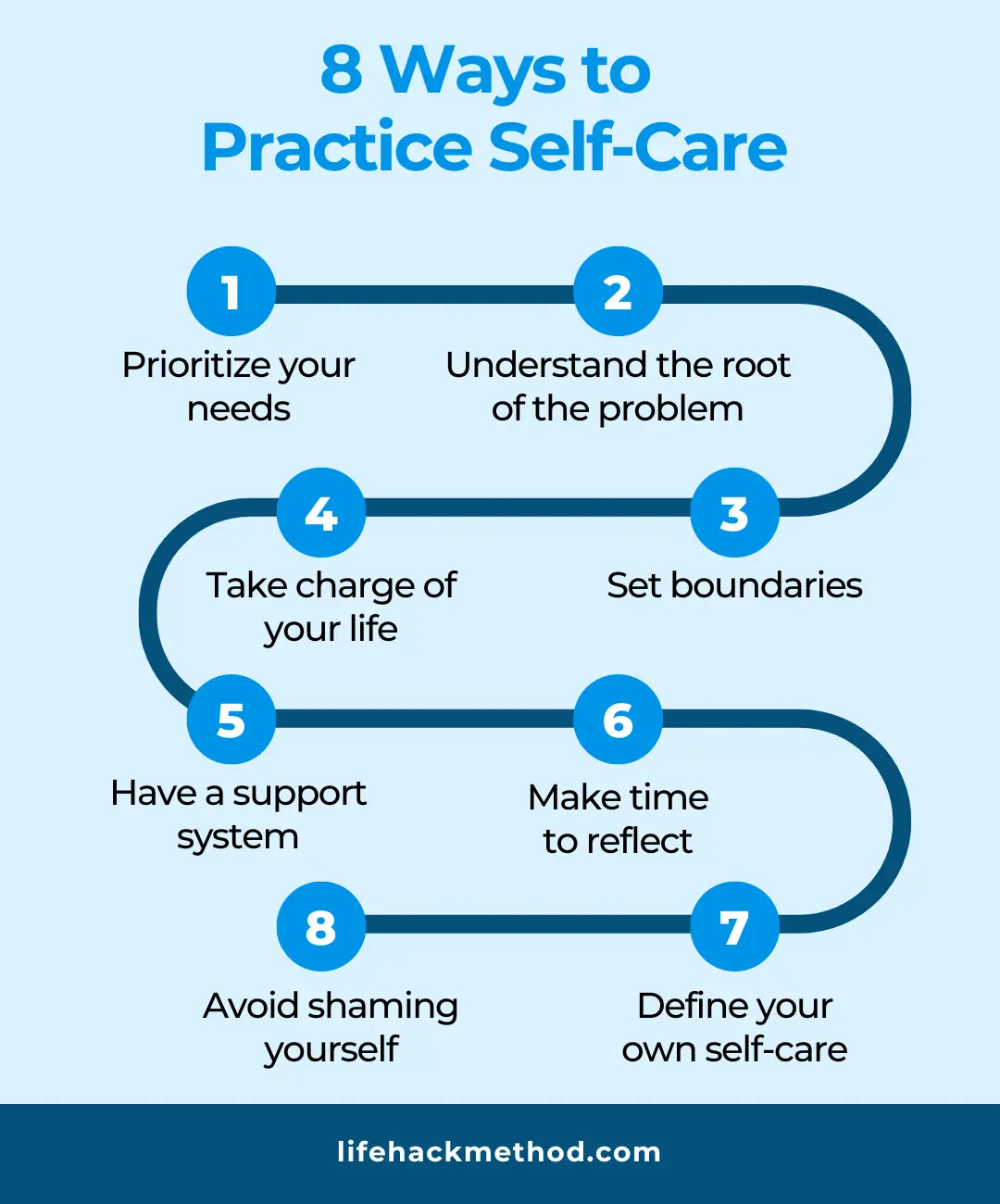
This article is not another list of superficial self-care tips. This is a practical, evidence-based guide to building a sustainable self-care routine—a personalized system that addresses the root causes of your burnout and fosters resilience from the ground up. We will move beyond treating the symptoms and focus on creating a foundational shift in how you manage your energy and well-being. This is the American burnout fix you’ve been searching for.
Part 1: Diagnosing the Problem—Understanding the Roots of American Burnout
Before we can build a solution, we must first understand the unique cultural and psychological landscape of burnout in the USA.
The “Hustle Culture” Trap
In many American workplaces, being busy is a badge of honor. We wear our exhaustion as a symbol of our dedication. This “hustle culture” creates a perfect storm for burnout by:
- Glorifying Overwork: Consistently working long hours is often rewarded and seen as a path to success.
- Blurring Boundaries: The proliferation of smartphones and remote work has made it increasingly difficult to truly “log off.”
- Linking Self-Worth to Productivity: Many of us subconsciously believe that our value is directly tied to our output, leading to guilt and anxiety during downtime.
The Digital Onslaught and Always-On Mentality
The average American is bombarded with notifications, emails, and messages 24/7. This constant state of low-grade alertness keeps our nervous systems in a perpetual fight-or-flight mode, preventing the deep rest necessary for recovery.
The Misunderstanding of Self-Care
The wellness industry has often co-opted the term “self-care,” selling it as a series of purchasable, isolated luxuries: a scented candle, a face mask, a gym membership. While these things can be pleasant, they are merely band-aids if the underlying structure of your life is causing systemic energy depletion. True self-care is the intentional, ongoing practice of protecting and nurturing your holistic well-being. It’s often mundane, unglamorous, and requires discipline.
Part 2: The Pillars of Sustainable Self-Care—A Foundation for Resilience
A sustainable self-care routine is not a single activity; it’s an ecosystem built on several core pillars. When one pillar is weak, the entire structure becomes unstable. Our goal is to fortify each one.
Pillar 1: The Physical Foundation
You cannot think, feel, or perform your way out of burnout if your body is fundamentally depleted. This is non-negotiable.
- Sleep as a Superpower: Stop viewing sleep as a luxury or a time-waster. It is the most critical period for physical and mental repair.
- Actionable Strategy: Prioritize sleep hygiene. Create a cool, dark, and quiet sleeping environment. Establish a consistent bedtime and wake-up time (even on weekends). Implement a “digital sunset” 60 minutes before bed—no phones, tablets, or TVs. The blue light emitted from screens suppresses melatonin production, disrupting your sleep cycle.
- Movement as Medicine, Not Punishment: Exercise is a powerful antidote to stress, but it must be approached correctly. When burned out, intense workouts can add to your allostatic load (the cumulative burden of stress).
- Actionable Strategy: Focus on gentle, restorative movement. A daily 20-30 minute walk in nature, yoga, stretching, or tai chi can lower cortisol levels, improve mood, and enhance sleep without depleting you further. Listen to your body; some days, rest is more important than a rigorous workout.
- Nourishment for a Stressed System: Under chronic stress, our bodies crave quick energy, often in the form of sugar and processed carbs. This leads to energy crashes and increased inflammation.
- Actionable Strategy: Aim for stability. Prioritize whole foods—lean proteins, healthy fats, complex carbohydrates, and fiber. These provide a slow, steady release of energy. Stay hydrated, as even mild dehydration can exacerbate fatigue and brain fog. Prepare simple, nutritious meals in batches to avoid reaching for unhealthy options when you’re tired and stressed.
Pillar 2: The Emotional and Mental Core
This pillar is about managing your internal world—your thoughts, feelings, and reactions to stress.
- Mindfulness and Present-Moment Awareness: Burnout lives in the anxiety of the future and the regrets of the past. Mindfulness anchors you in the “now.”
- Actionable Strategy: Start a daily meditation practice. You don’t need to sit for an hour; even 5-10 minutes using an app like Calm or Headspace can rewire your brain’s stress response. Alternatively, practice mindfulness during daily activities: fully focus on the taste of your food, the sensation of water in the shower, or the feeling of your feet on the ground during a walk.
- Cognitive Reframing: Burnout is often accompanied by a negative internal narrative (“I can’t handle this,” “I’m a failure,” “This will never end”).
- Actionable Strategy: Practice cognitive behavioral techniques. When a stressful thought arises, challenge it. Ask yourself: “Is this thought 100% true?” “What is a more balanced or compassionate way to view this situation?” This isn’t about positive thinking; it’s about accurate thinking.
- Setting Impeccable Boundaries: This is arguably the most crucial skill for preventing burnout in the American workplace. Boundaries protect your time, energy, and emotional well-being.
- Actionable Strategy:
- At Work: Clearly communicate your working hours and stick to them. Use calendar blocks for focused work. Learn to say “no” or “I can’t take that on right now, but I can revisit it next week” without over-apologizing.
- In Personal Life: It’s okay to decline social invitations when you need rest. Mute non-essential group chats. Protect your personal time as fiercely as you protect a business meeting.
- Actionable Strategy:
Pillar 3: The Environmental and Social Scaffolding
Your environment and relationships either drain your energy or replenish it.
- Curating Your Environment: A cluttered, chaotic space contributes to a cluttered, chaotic mind.
- Actionable Strategy: Dedicate time to decluttering your primary spaces—your desk, your bedroom, your car. Organize your digital life by unsubscribing from unwanted emails and organizing your files. Introduce elements of calm, such as plants, natural light, or soothing colors.
- Cultivating Connection: Burnout thrives in isolation. Connection is an antidote.
- Actionable Strategy: Prioritize quality time with people who fill your cup—those you can be your authentic self with without judgment. Schedule regular check-ins with friends or family. Consider joining a club, class, or support group to build a sense of community.
- Digital Detoxification: Constant connectivity is a primary driver of burnout.
- Actionable Strategy: Implement tech boundaries. Designate phone-free times (e.g., during meals, the first hour of the day). Turn off non-essential notifications. Schedule one longer “digital detox” period each week—perhaps a Sunday afternoon—where you completely disconnect from screens.
Read more: The “Soft Life” Revolution: Why American Women Are Prioritizing Ease and How You Can Too
Part 3: The 4-Week Burnout Recovery and Resilience Plan
This is your actionable, step-by-step guide to building a sustainable routine. The key is to start small and build consistency.
Week 1: The Foundation Week (Mastering the Basics)
- Focus: Sleep and Hydration.
- Daily Non-Negotiables:
- Be in bed with lights out by a set time (e.g., 10:30 PM).
- Drink a large glass of water upon waking.
- Take a 10-minute walk outside.
- Mindfulness Task: One “mindful minute.” Three times a day, pause for 60 seconds and just notice your breath.
Week 2: The Integration Week (Adding Fuel and Focus)
- Focus: Nutrition and Mindfulness.
- Daily Non-Negotiables:
- Continue all Week 1 habits.
- Eat a breakfast containing protein and complex carbs (e.g., eggs with whole-wheat toast, Greek yogurt with nuts).
- Practice a 5-minute guided meditation (use an app).
- Boundary Task: Set one new boundary. Example: “I will not check email after 7 PM,” and communicate this to your team or family.
Week 3: The Connection Week (Strengthening Your Scaffolding)
- Focus: Movement and Social Connection.
- Daily Non-Negotiables:
- Continue all previous habits.
- Increase your walk to 20 minutes or try a gentle yoga session online.
- Send one text or call to a friend or family member, just to connect.
- Environment Task: Declutter one small space (a junk drawer, your email inbox).
Week 4: The Sustainability Week (Making it Your Own)
- Focus: Reflection and Refinement.
- Daily Non-Negotiables:
- Continue the habits that feel best from the previous weeks.
- Each day, reflect in a journal: “What drained my energy today? What gave me energy?”
- Task: Based on your reflections, design your ideal, sustainable weekly self-care schedule. It should include elements from all three pillars. This is not a rigid to-do list, but a flexible framework to guide you.
Part 4: When Self-Care Isn’t Enough—Seeking Professional Help
A self-care routine is a powerful tool for management and prevention, but it is not a substitute for professional medical or mental health treatment. Burnout can overlap with clinical conditions like Generalized Anxiety Disorder (GAD) and Major Depressive Disorder (MDD).
It is crucial to seek help from a licensed therapist, psychologist, or physician if you experience:
- Overwhelming feelings of hopelessness or despair.
- Inability to function in your daily responsibilities.
- Thoughts of harming yourself or others.
- Severe insomnia or changes in appetite.
- Using substances to cope.
Seeking help is a profound act of self-care. A professional can provide therapies like Cognitive Behavioral Therapy (CBT), which is highly effective for treating burnout, anxiety, and depression.
Conclusion: From Burnout to Balance—A Lifelong Practice
Fixing American burnout is not about finding a magic bullet. It’s about rejecting the unsustainable pace of hustle culture and committing to the slow, steady, and deeply rewarding work of building a resilient life.
Your sustainable self-care routine is your personal blueprint for that life. It won’t be perfect. There will be days you skip the walk, work late, or eat takeout. The goal is not perfection; it’s progress and consistency. By returning again and again to the foundational pillars of physical health, emotional management, and environmental support, you are not just recovering from burnout—you are building a future where you can thrive, not just survive.
Start today. Pick one small thing from this guide and do it. That single step is the beginning of your journey back to yourself.
Read more: Financial Self-Care: Budgeting and Mindset Shifts to Reduce Money Stress
Frequently Asked Questions (FAQ)
Q1: I’m too busy and burned out to even start a self-care routine. What should I do?
This is the most common and valid feeling. Start with the absolute smallest step possible. Commit to just one minute of deep breathing each day. Or, drink one glass of water as soon as you wake up. The goal is to build a “winning streak” of tiny successes. Momentum builds from the smallest of actions.
Q2: How long does it take to recover from burnout?
There is no set timeline. Recovery is a process, not an event. For some, noticing a significant shift may take a few weeks of consistent practice; for others, it may take several months or longer, especially if the burnout is severe. Be patient and compassionate with yourself. The focus should be on consistent daily practices, not a final destination.
Q3: What’s the difference between burnout and depression?
They share many symptoms, like exhaustion and loss of interest, but there are key differences. Burnout is typically linked to your work or caregiving role and feelings of cynicism related to that specific context. Depression is a broader clinical mental health disorder that affects all areas of life and is characterized by pervasive low mood, feelings of worthlessness, and a loss of interest or pleasure in most activities, not just work. It’s possible to have both simultaneously. If you are unsure, consulting a mental health professional is essential for an accurate diagnosis.
Q4: My workplace is the primary cause of my burnout. Is self-care enough?
This is a critical question. Self-care is a powerful tool for building personal resilience, but it cannot fix a toxic work environment. If your workplace has unsustainable demands, poor leadership, or a culture of overwork, self-care can help you cope, but systemic change is also needed. Use the clarity gained from your self-care practice to assess your situation. It may empower you to have conversations with your manager about workload, set firmer boundaries, or, if necessary, begin exploring other employment opportunities.
Q5: I feel guilty when I take time for myself. How can I overcome this?
This guilt is deeply ingrained, especially in high-achievers. Reframe your thinking: self-care is not selfish; it’s self-stewardship. You cannot pour from an empty cup. By taking care of yourself, you are ensuring that you have the energy, patience, and presence to be effective at work and show up fully for the people who depend on you. It is a necessary maintenance practice for the complex system that is you.